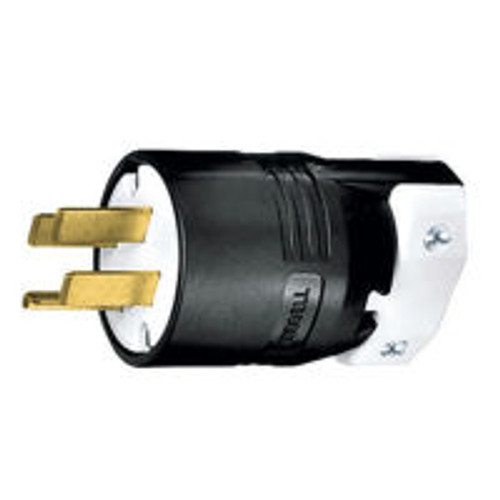

Key Features
- L10-30
- 30 Amps, 125/250 Volts, 3 Pole, 3 Wire
- UL/cUL Listed
Documentation
- Certificate of Compliance
- Certificate of Origin
- REACH Compliance
- RoHS Compliance
- Prop 65 Declaration
- WEEE Compliance
- Product Lifecycle Statement
- ISO 9001:2015 QMS Certificate
Specifications
| Amperage | 30 Amps |
| Certifications | UL/cUL Listed |
| Cord Grip Range | .300" - .950" (7.62 - 24.13mm) |
| Gauge Range | 16 AWG - 8 AWG |
| Ingress Protection | IP20 |
| Plug | L10-30 |
| Poles / Wires | 3 Pole, 3 Wire |
| Termination Type | Standard |
| Voltage | 125/250 Volts |
| Housing Style | Insulgrip |
Application Notes
Twist-lock plugs are used in applications where a secure electrical connection is critical and accidental disconnection must be avoided. Common use cases include:
- Industrial equipment – heavy machinery, compressors, welders
- Generators and temporary power – construction sites, outdoor events, emergency backup
- Commercial kitchens – appliances like ovens, fryers, dishwashers
- Theatrical and stage lighting – to prevent power loss during performances
- Data centers and server rooms – for UPS systems and PDUs
- Marine and RV setups – shore power connections
Product FAQs
What is a twist-lock plug?
A twist-lock plug is a type of electrical plug that locks into place with a simple twist, ensuring it doesn’t accidentally pull out or disconnect.
Why use a twist-lock plug instead of a standard plug?
Because standard plugs fall out. Twist-lock plugs stay put—even with vibration, movement, or people tripping over cables. It’s about safety, reliability, and compliance.
How does a twist-lock plug work?
Insert → Twist → Locked. The plug has curved blades that mate with matching receptacles. When twisted, they engage securely—mechanically and electrically.
Do I need a special outlet for twist-lock plugs?
Yes. Twist-lock plugs require a matching twist-lock receptacle—they're not compatible with standard wall outlets.